
Table of Contents
Why What You Wear Actually Matters
Most people spend all their attention on getting the lighting, expression, and background right for their passport photo. They do not think much about what they are wearing. That is usually fine - but sometimes the wrong outfit is exactly what causes a rejection.
Passport photos are government identification documents. They need to show a clear, accurate representation of your face, and anything that interferes with that - clothing that blends into the background, headwear that obscures your features, accessories that create distracting reflections - can become grounds for rejection.
The rules are not complicated, and most regular clothing works fine. But some choices create problems that people do not anticipate until they get the rejection notice. This guide covers what works, what does not, and the handful of country-specific differences worth knowing about.
Best Colors to Wear
The background for most passport photos is white. Your clothing needs to contrast with it. That means dark or medium-toned clothing photographs best.
Works Well
- Navy blue
- Dark green / forest green
- Burgundy / maroon
- Charcoal gray
- Black
- Deep purple
- Warm brown / chocolate
Avoid
- White or off-white (blends with background)
- Very light pastels near skin tone
- Bright neon colors (distracting)
- Complex patterns (visually noisy)
- Stripes (can create moire in digital images)
The absolute worst choice is a white shirt or blouse against a white background. Your head and neck appear to float in a sea of white, which creates an unnatural-looking photo. Some reviewers will reject it outright because the outline of your body is not clearly defined.
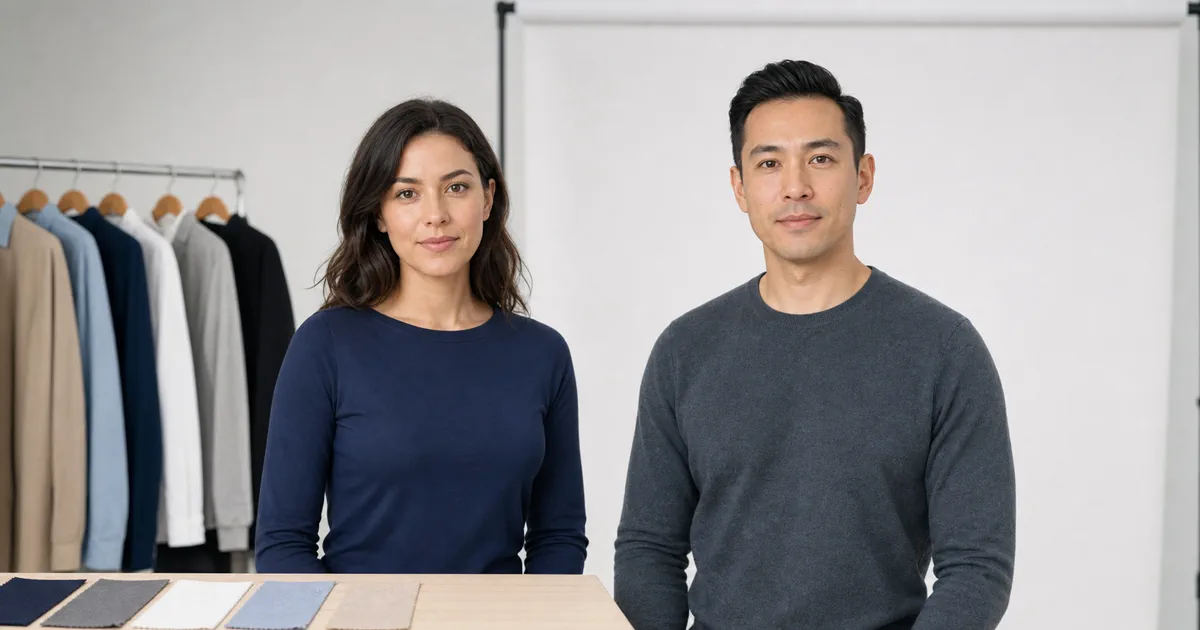
Dark solid colors are the safest option. Navy blue is probably the single best color for passport photos - it photographs cleanly, contrasts strongly with the white background, and looks professional in any context. If you are not sure what to wear, a navy blue crew-neck top is nearly always a safe bet.
Clothing to Avoid
Beyond color, certain types of clothing create specific problems in passport photos:
Uniforms
Military uniforms, police uniforms, and government agency uniforms are explicitly prohibited in most countries for civilian passport photos. The concern is that the photo should identify you as a private citizen, not as a representative of any organization. Work uniforms like scrubs, chef whites, or corporate polos are a gray area - they probably will not cause a formal rejection, but changing into something neutral removes any uncertainty.
Sleeveless tops and tank tops
While there is no specific rule against bare shoulders in most Western countries, some countries - particularly in the Middle East and South Asia - require that shoulders be covered. For a photo that needs to work internationally or across multiple visa applications, a top with short sleeves or longer is safer.
High turtlenecks
A turtleneck that comes up to your chin can obscure the lower edge of your jawline. Some reviewers have flagged this because the chin-to-neck boundary is unclear. A crew neck or open collar is a better choice.
Clothing with logos or text
A small brand logo on a polo collar is generally fine. A large graphic print, slogan, or text across the chest can be distracting and may draw attention away from your face. Plain, solid-colored clothing with no visible graphics is the cleanest option.
Scarves draped loosely
A scarf worn for fashion (not religious reasons) that drapes across your neck and chest can look bulky and create uneven lines in the photo. If you wear one for warmth, remove it for the photo. Religious head coverings are treated differently and are discussed in the next section.
Head Coverings and Religious Attire
This is one of the most common questions people have, and the rules are more accommodating than many expect.
In the United States, the UK, Canada, India, Australia, and all Schengen countries, head coverings worn for religious reasons are explicitly permitted. This includes hijabs, turbans, yarmulkes (kippah), and other faith-based headwear. No country requires you to remove religious head coverings for a passport or visa photo.
The key condition is that your full face must remain visible. That means:
- • Your face from the bottom of your chin to the top of your forehead must be uncovered
- • Both edges of your face must be visible - the covering should not wrap along the sides of the face
- • The covering must not cast shadows on your face
- • Your eyes must be fully visible with no part of the covering crossing your brow line
For turbans, the same face-visibility rule applies. Both ears do not need to be visible if the turban traditionally covers them, as long as the full face - forehead to chin, cheek to cheek - is clearly shown.
Non-religious head coverings: Hats, baseball caps, beanies, headbands, and bandanas worn for fashion are not allowed in passport photos in any country. If you wear a hat daily, you still need to remove it for the photo. The exemption is strictly for sincerely held religious or medical reasons.
Glasses and Eyewear
The simple rule in 2026: remove your glasses. The US banned glasses in passport photos in November 2016. India, the UK, Canada, Australia, and all Schengen countries followed with similar prohibitions. Even most countries that do not have an explicit ban reject photos where lenses cause glare or reflections.
There is a medical exception in some countries. If you have a documented condition that makes it medically impossible to remove your glasses - such as severe photophobia - you can submit a signed letter from your physician. The bar for this exception is high. "I need them to see" is not sufficient; the exception is for cases where removal would cause medical harm.
Sunglasses, tinted lenses, and decorative frames (with or without lenses) are prohibited everywhere, without exception. Contact lenses are allowed in all countries, including colored contacts, though some authorities advise against lenses that significantly alter your natural eye color.
Jewelry and Accessories
No country has a blanket ban on jewelry in passport photos. Small, understated pieces are universally accepted. Stud earrings, a simple necklace, a nose pin - these will not cause any issue.
Where jewelry becomes a problem is when it creates visual distractions or practical issues in the photo:
- • Large, shiny earrings can reflect light and create bright spots
- • Dangling earrings or heavy necklaces draw the eye away from the face
- • Piercings across the face (nose bridge, eyebrow) can be flagged if they obscure facial features
- • Chunky statement necklaces can create uneven shadows on the neck and jawline
The practical advice: wear jewelry you normally wear on a regular day. If it is something you only bring out for special occasions, leave it off. The passport photo should represent your everyday appearance.
Makeup Guidelines
Makeup is allowed in passport photos across all countries. The guiding principle is that the photo should look like you on a normal day. Light, everyday makeup is perfectly fine.
Acceptable: Light foundation or tinted moisturizer, concealer under the eyes, subtle blush, basic mascara, natural lip color, light powder to reduce shine. These are the types of makeup that even close-up photos will not flag.
Problematic: Heavy contouring that reshapes the nose or jawline, dramatic cat-eye liner, false eyelashes that fundamentally change your eye shape, extreme lip color that draws attention, and thick foundation that creates an unnaturally uniform skin tone. All of these alter your recognizable features.
One detail worth mentioning: if you normally wear noticeable makeup every day and it is part of your usual appearance, you should wear it for the photo. The passport photo needs to look like you when a border officer compares it to your face. If you normally go without makeup, do not add it for the photo either. Consistency with your daily look is the goal.
Hair and Grooming
Your hairstyle does not matter as long as it does not cover your face. The requirements are functional, not aesthetic:
- • Both eyes must be fully visible - no bangs hanging over one or both eyes
- • The edges of your face should be visible - hair swept forward across your cheeks can obscure the outline
- • Both ears should be visible if possible (some countries are stricter about this than others)
- • Your hairline should be visible - thick bangs covering the entire forehead are not ideal
If you have long hair, push it behind your shoulders so it does not create bulk on the sides of the frame. If you have bangs, consider sweeping them to the side to expose your forehead. None of this requires changing your hairstyle permanently - just arrange it for the few seconds of the photo.
Regarding beards and facial hair: these are allowed in all countries. Whether you have a full beard, stubble, a mustache, or are clean-shaven, the photo needs to match how you currently look. There is no requirement to shave or trim. Just make sure the beard is neat and does not obscure your mouth or the outline of your jaw.
Rules for Children and Infants
Children's passport photos follow the same general clothing rules. Dress them in a plain, dark-colored top. Avoid bright prints, cartoon characters, or anything visually busy. Hair accessories like bows and clips should be removed because they add non-standard elements to the photo.
For infants, the clothing requirements are more relaxed because the photo typically shows only the face. A plain white onesie is fine for babies since very little of it shows in the frame. The more important challenge with infant photos is getting the expression and positioning right - a baby looking straight at the camera with both eyes open is harder to achieve than picking the right outfit.
Pacifiers must be removed. Bibs should be out of frame. If the child wears glasses for a medical condition, the same adult rules apply - remove them unless a medical letter supports keeping them on.
Country-Specific Clothing Notes
Most clothing rules are universal, but a few countries have specific requirements or cultural expectations worth noting:
| Country | Notable Clothing Rules |
|---|---|
| United States | No glasses (since 2016). No uniforms. Religious head coverings allowed with signed statement. Normal clothing recommended. |
| United Kingdom | No glasses. Dark clothing preferred against white/light gray background. Head coverings for religious reasons allowed. |
| India | No glasses. Religious head coverings (turbans, hijabs) allowed. Military/police uniforms prohibited. Photo must show natural complexion. |
| Canada | No glasses. Must contrast with background. No dark glasses, no headwear except religious. Neutral expression. |
| Saudi Arabia | Women may wear hijab. Men should wear formal or traditional attire. Avoid casual Western-style clothing if possible. |
| Japan | No headwear including religious coverings (one of few countries). Very strict on head positioning and expression. |
| Indonesia | Red background for national ID, white for passport. Hijab allowed. Formal attire expected. Avoid casual clothing. |
Frequently Asked Questions
Can I wear a hijab in my passport photo?
Should I wear white for a passport photo?
Can I wear makeup in a passport photo?
Are uniforms allowed in passport photos?
Can I wear earrings or a necklace?
Dressed Right? Take Your Photo.
Upload your image and format it for the selected country. One standard daily download is available; HD and print-ready exports require Pro.
Prepare My Photo